

“I tried it, it worked… and then I gained it back.” If this is your experience, it is not due to a lack of willpower. It occurs because your brain is functioning as designed.
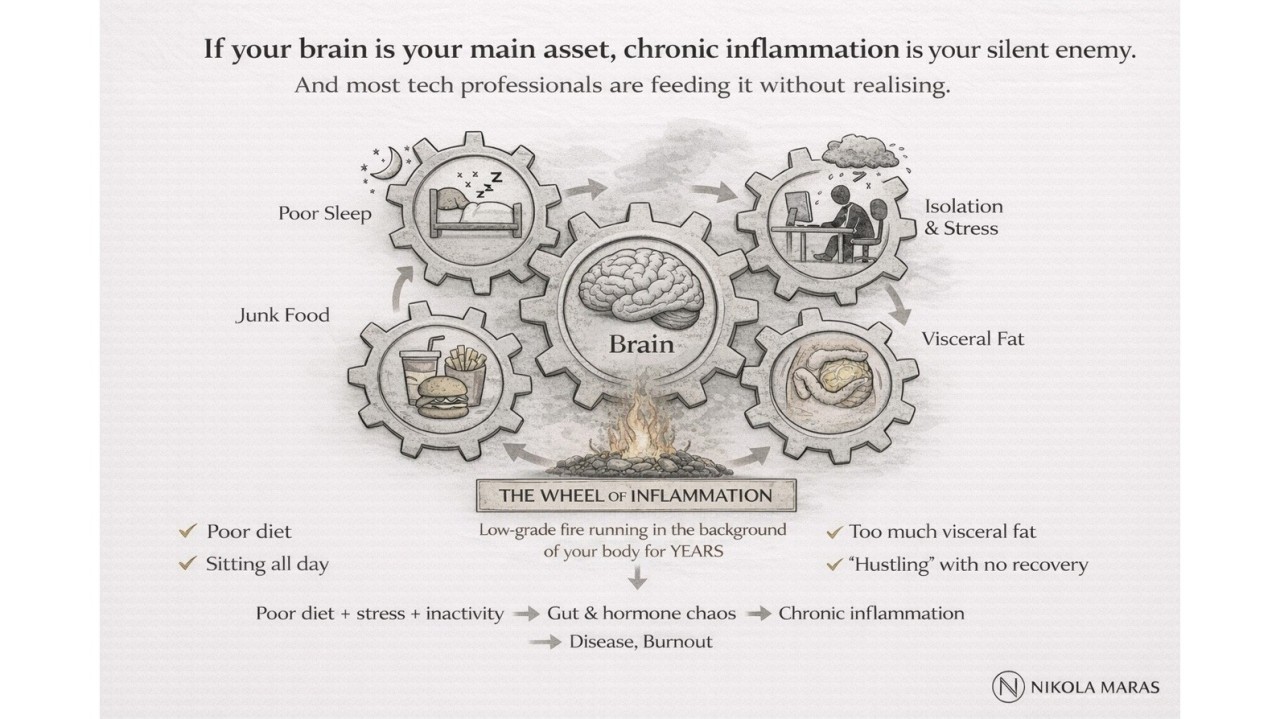
As a technology engineer and later a leader, my greatest underlying challenge was not only stress. It was the extensive time spent sitting to achieve results.
- hours at the desk
- hours in the car
- hours in meetings
All of this occurred while I chose the most convenient food and drinks.
I often reached for a soda or snacks while coding, driving, or between meetings. This behavior was common among my colleagues as well. These habits became my comfort zone.
However, this presented a significant risk:
Comfort zones are not sustainable indefinitely. Often, we overlook this until our bodies signal the need for change.
We know it’s not great for us. We know we should move more, eat better, and go to bed earlier.
We begin a new habit, see results, and feel better, but gradually revert to old patterns.
Why?
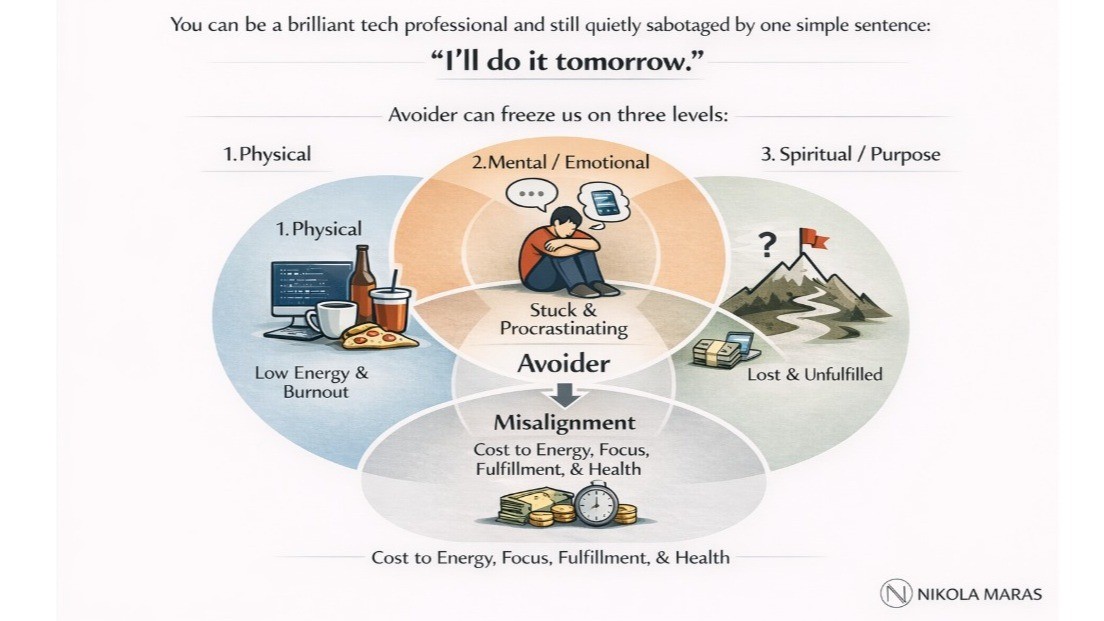
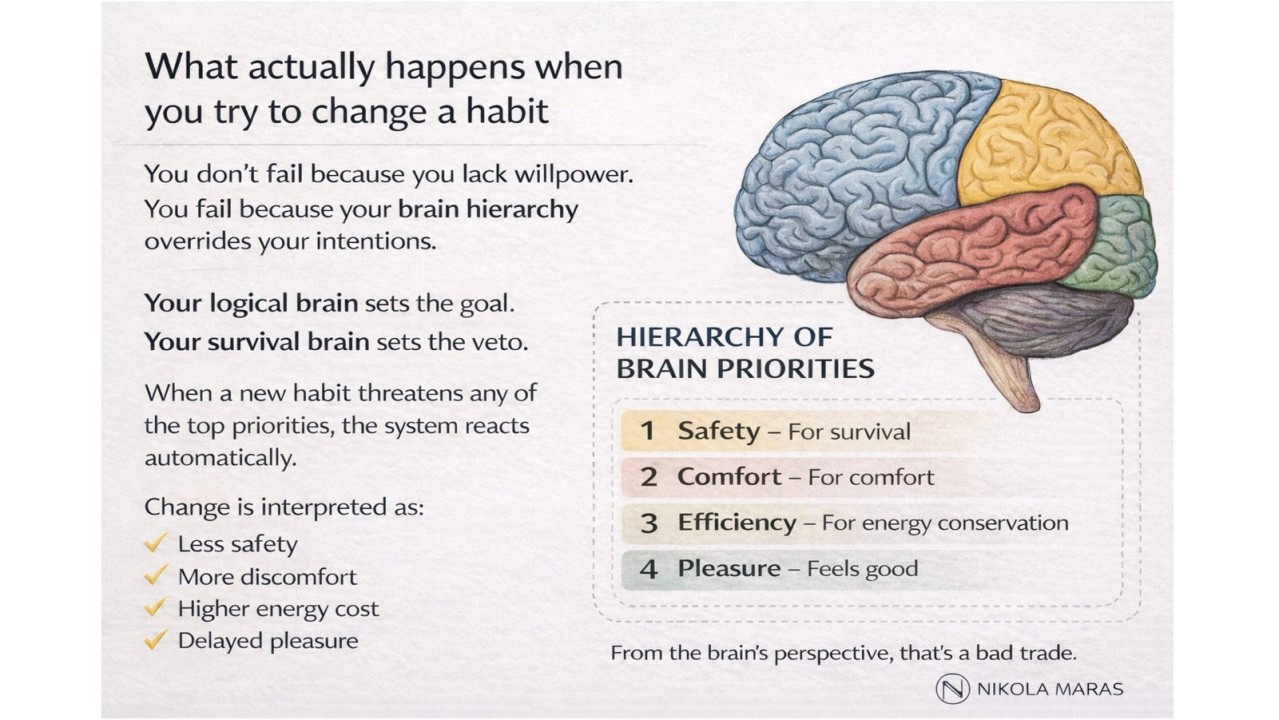
This happens because, although we believe we set our priorities, the brain operates according to its own hierarchy (see the image):
- Safety – for survival
- Avoidance of pain – for comfort
- Energy conservation – for efficiency
- Pleasure – feels good
Behaviors such as sitting, snacking, and remaining inactive fulfill all four needs in the short term.
Changing habits? Your brain interprets this as:
- possible danger
- potential discomfort
- more energy use
- less immediate pleasure
Naturally, the brain resists change. Procrastination is a common response. It is understandable to feel unmotivated.
Additionally, the brain consists of multiple systems:
- 🧠 Logical brain – reasons, plans, solutions
- 💓 Emotional brain – fear, shame, pride, happiness
- 🦴 Instinctual/survival brain – pain & fear triggers
When you attempt to make changes using logic alone (“From Monday I’ll eat clean and exercise 5x a week”), but your emotional and survival systems still respond strongly:
- “This is hard.”
- “What if you fail again?”
- “Let’s just relax tonight.”
The logical brain is often overruled.
The logical brain does not prevail. The system reverts to prioritizing safety, comfort, minimal effort, and immediate pleasure.
What is the solution for technology professionals?
Stop working against your brain. Instead, collaborate with it.
- Make change feel safe by taking small, manageable steps rather than extreme measures.
- You may anticipate discomfort and view it as an opportunity for growth rather than a threat.
- Develop habits that require minimal energy to initiate.
- Select activities that restore energy rather than deplete it.
For example, I implemented the following changes:
- swapping Coke at the desk for a big bottle of water
- adding short walks and movement breaks
- using mental fitness techniques (PQ) to identify unhelpful thoughts such as
“You’re tired, you deserve to chill. Start tomorrow.”
- treating sleep and recovery as essential rather than optional.
When you acknowledge how your brain functions, change becomes less of a struggle and instead becomes a series of thoughtful, aligned improvements.
If you are a technology professional who:
- sits all day
- “comfort eats” or snacks on autopilot.
- has attempted to change multiple times but reverts to previous habits;
This is not a matter of discipline. It is a challenge related to brain function and systems.
When you address the system, improvements in energy, sleep, and weight will follow.
If you would like assistance in designing changes that your brain will accept, so you can increase your energy and improve your sleep within 90 days,
please send me a direct message. We will begin enhancing the only operating system you cannot replace.