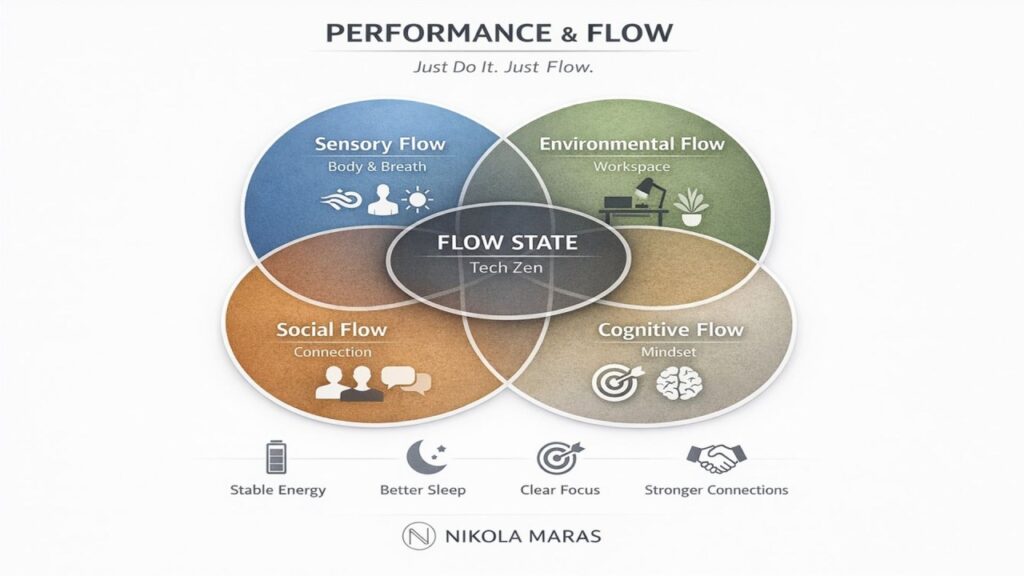
High-Tech Performers Don’t Wait for Good Days. They Create Them.
I’ve always been fascinated by two things: performance and flow. At first, it was Air Jordan…
High-Tech Performers Don’t Wait for Good Days. They Create Them. Read More »



I’ve always been fascinated by two things: performance and flow. At first, it was Air Jordan…
High-Tech Performers Don’t Wait for Good Days. They Create Them. Read More »
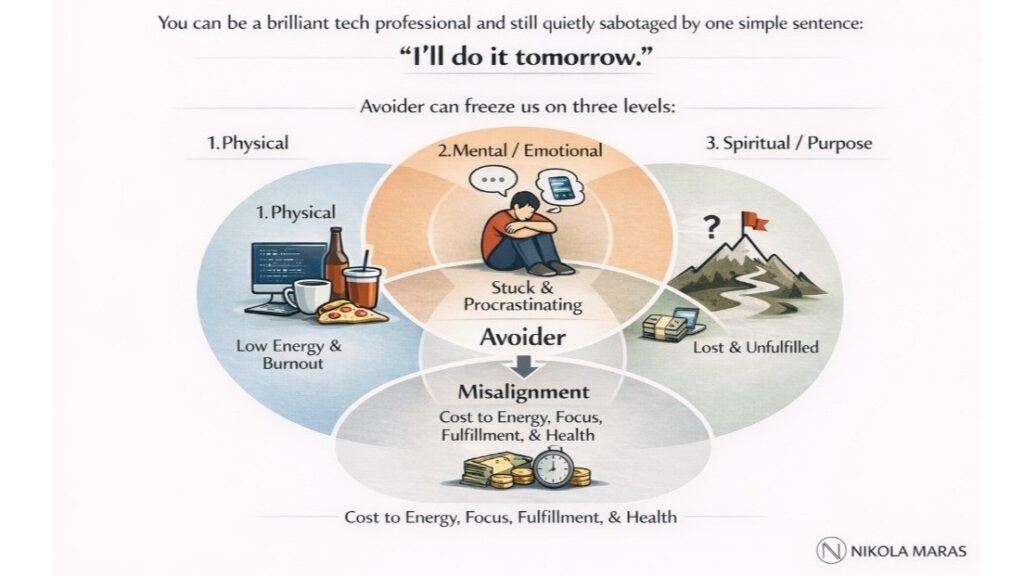
You can be a brilliant tech professional and still be quietly sabotaged by one simple sentence: “I’ll do it tomorrow.” The Avoider mindset used to hold me back in many areas of my life. My mum would often say to me in German: “Morgen, morgen, nur nicht heute, sagen alle faulen Leute.” (“Tomorrow, tomorrow, just not today, say all the lazy people.”) At first, it just seemed like a joke about being lazy. But deep down, I sensed there was more to it. What is “laziness,” really? Lack of motivation? Or maybe it’s that inner voice that appears right when we need to take action: I loved to dream and imagine. But when it was time to act on certain things, I found myself putting them off again and again. It hurt. It felt like a slow form of self-torture. You know you’re capable, but you still don’t move forward. And if you work in tech, you probably know this pattern too: You put things off during the day, then try to make up for it at night, swapping day for night just to finish your work. This can easily turn into a habit: late-night coding, answering emails, handling incidents, or telling yourself, “just one more task.” And the first thing you lose is your most important resource: deep, restorative sleep. Over time, this drains: Everything changed for me at 21, when I first felt a sense of inner freedom: “I am free.” Running and focusing on my breath helped me experience a different reality. I realised something important: We can be free from that voice. We can actually enjoy action. Like any real change, it only became simple when I was truly ready for it. Before that, I was the one making things complicated for myself. Now, I see that the Avoider pattern can hold us back in three main ways: 1️⃣ Physical When we always look for comfort, it’s easy to turn to food whenever we feel uncomfortable. We feel discomfort. The fridge can start to feel like a safe place. Add in sugar, alcohol, treats, and heavy carbs, and your body starts to feel slow, tired, and heavy. If you also start using your nights as “productivity time,” Your nervous system can lose its natural rhythm. The result is low energy, brain fog, reduced performance, and increased risk of burnout. 2️⃣ Mental / Emotional People who avoid things dislike uncomfortable situations and tough conversations. Our real strength is wanting life to feel good, easy, flexible, and in flow. That’s beautiful. But if we always avoid what’s uncomfortable, In tech, this can look like: 3️⃣ Spiritual / Purpose level The Avoider pattern keeps us from the things that truly matter, especially when they require courage and action: that project, that change, that step toward your deeper “why”. If we don’t have a clear sense of purpose, values, or North Star, it becomes much easier to avoid things and distract ourselves than to face what we truly want deep down. Once we know: It all becomes much clearer: “I have to move toward this. Not because someone else says so, But because this is my life.” For me, being free means this: This takes working on all three levels together. If you recognise yourself in any of this: You’re not lazy. You’re just caught in the Avoider pattern. If you’re ready to shift from Avoider to Action, while still protecting your energy, sleep, and health as a tech professional, Send me a message. I’m confident we can find a way out of that cycle on all three levels. Remember, with every choice, find your voice for limitless freedom. 🎯
Procrastination isn’t a time problem. It’s an emotional regulation problem. Read More »
The organic and psychophysical reasons keeping developers awake—and what to do about it It’s 2 AM. You closed your laptop three hours ago, but your brain is still running like a server under heavy load. You’re mentally debugging code, architecting solutions, or replaying that code review from earlier. If you’re a programmer struggling with sleep, you’re not experiencing some personal failing. Your sleeplessness has deep biological and psychological roots that are directly connected to how your developer brain works. The Programmer’s Brain: Wired for Insomnia Your programmer brain is essentially a pattern-matching machine on steroids. You spend eight-plus hours daily training it to spot inconsistencies in thousands of lines of code, hold complex system architectures in working memory, and anticipate edge cases that could break everything. This hypervigilance doesn’t have an off switch. When you try to sleep, your brain continues scanning for patterns, problems, and solutions, except now it’s processing your day, tomorrow’s challenges, and that elusive bug you couldn’t squash. Programming also rewires your brain’s reward system in ways that sabotage sleep. Each successful compilation, each passing test, each solved problem triggers a dopamine release. Your brain becomes addicted to this problem-solving high. At bedtime, your brain craves more of these rewards and starts generating problems to solve. It asks questions like “What if I refactored that function?” or “How could I optimize that algorithm?” This isn’t insomnia in the traditional sense. It’s your brain seeking its next analytical fix. The Physical Reality of Developer Sleep Problems The screens you stare at all day emit blue light that directly suppresses melatonin production, but the problem goes deeper than simple light exposure. Programmers face extended exposure of eight to twelve hours daily, often working with high-contrast interfaces and coding late into the night when their bodies should naturally be winding down. Multiple monitor setups create ambient light pollution, keeping your environment artificially bright. Your pineal gland, responsible for producing melatonin, interprets this constant exposure to blue light as perpetual daylight, keeping you in a state of artificial alertness. Programming work also creates a cortisol problem that most people don’t experience. Healthy cortisol patterns show high levels in the morning that gradually decline toward evening, but deadline pressure, debugging sessions, and the cognitive demands of complex problem-solving keep your stress hormones elevated throughout the day. When cortisol levels remain high at bedtime, your body stays in an alert mode, making sleep physiologically impossible. Perhaps most problematic is the mismatch between mental exhaustion and physical fatigue. Your body is designed to be tired at night from physical exertion, but programming creates mental exhaustion without physical fatigue. Your mind is drained, but your body hasn’t moved enough to trigger natural sleep mechanisms. This sedentary lifestyle, combined with limited natural sunlight exposure and poor posture that affects breathing patterns, disrupts the natural buildup of adenosine, the chemical that induces sleepiness. The Mental Traps That Keep You Awake Your developer brain processes information differently from most people’s brains. You think in systems, loops, and conditional statements, and this analytical thinking style doesn’t naturally transition into the relaxed, non-linear thought patterns necessary for sleep. At bedtime, your brain starts “compiling” the day’s events, mentally refactoring problems from work, and queuing up tomorrow’s coding challenges for processing. You enter debugging mode on life situations when you should be powering down. Many programmers also carry perfectionist tendencies that extend to sleep itself. You might obsess over getting exactly eight hours of sleep, calculate optimal bedtimes and wake times, or monitor sleep metrics obsessively. This performance anxiety around sleep creates the very stress that prevents good sleep from happening naturally. The quiet of bedtime also allows imposter syndrome thoughts to surface after daytime distractions have kept them at bay. Thoughts like “Everyone else codes faster than me” or “I’m going to get found out tomorrow” trigger the same stress response as actual threats, flooding your system with alertness hormones just when you need to be calm. When Biology Meets Psychology: The Vicious Cycle These organic and psychological factors don’t exist in isolation—they amplify each other in a destructive cycle. Exposure to blue light disrupts melatonin production, resulting in poor sleep quality. Inadequate sleep increases cortisol levels, which heighten anxiety and racing thoughts. These racing thoughts create sleep anxiety, which releases more cortisol. Elevated cortisol makes you more sensitive to stressors, triggering more imposter syndrome thoughts. The resulting anxiety keeps you on screens longer, creating more blue light exposure, and the cycle continues. Breaking Free: Practical Solutions That Work To address the biological factors disrupting your sleep, it is essential to manage light exposure strategically. Use blue light filtering glasses two to three hours before bed and install software like f.lux on all your devices. Keep your bedroom completely dark with blackout curtains or an eye mask, and get fifteen to thirty minutes of morning sunlight to reset your circadian rhythm. Take a ten- to fifteen-minute walk after your last coding session to bridge the gap between mental exhaustion and physical readiness for sleep. Proper hydration plays a crucial role in sleep quality that most programmers overlook. Dehydration, even mild, can increase cortisol levels and make it harder for your body to regulate temperature—both essential for good sleep. However, timing matters. Drink plenty of water throughout your coding day, but taper off two to three hours before bedtime to avoid middle-of-the-night bathroom trips that fragment your sleep cycles. Breathing exercises are particularly powerful for programmers because they directly counteract the shallow, stressed breathing patterns that develop during intense coding sessions. The 4-7-8 breathing technique works exceptionally well for developer brains because it gives your analytical mind something to focus on while simultaneously activating your parasympathetic nervous system. Inhale through your nose for four counts, hold for seven counts, then exhale through your mouth for eight counts. Repeat this cycle four times. This technique not only helps you fall asleep faster but also trains your nervous system to shift from the hypervigilant state necessary for debugging into the relaxed
Why Programmers Can’t Sleep: The Science Behind Your Racing Mind Read More »

Have you ever reached for a chocolate bar after a stressful meeting? Or craving that second (or third) cup of coffee to push through the day? A drink in the evening has become your go-to way to unwind. Well, that is not unusual. High-performing leaders often operate in high-pressure environments where stress levels are off the charts. But the things we turn to for relief, such as sugar, caffeine, and alcohol, often drain our energy instead of replenishing it. If you want to double your energy, reduce stress cravings, and regain control, let’s explain why this happens and what you can do instead. My Personal Journey to Healthier Habits I remember when my days revolved around habits that drained me more than energized me. I relied on alcohol and coffee, and my diet lacked real nutrients and was full of sugary products. Deep down, I knew I had to make a change. The decision to stop drinking alcohol was rooted in a desire for clarity and well-being. I realized that alcohol was clouding my thoughts and impacting my energy levels. I longed for a sense of clarity and control over my life, and eliminating alcohol was a pivotal step towards achieving that. As for coffee, I noticed that my dependency on it was taking a toll on my overall health. I was caught in a cycle of highs and crashes, and my sleep patterns were suffering. The constant need for caffeine reminded me that my body was out of balance. So, I let go of coffee and found more sustainable ways to boost my energy. Changing my diet was the most transformative part of my journey. I began to educate myself about nutrition and food’s profound impact on our bodies and minds. I changed my diet and greatly improved my vitality and mood. The deep reason behind these changes was my commitment to living a life aligned with my values and aspirations. I wanted to be the best version of myself, physically and mentally. I tried to wake up each day feeling energized, focused, and capable of pursuing my dreams. It was about honoring my body and mind and recognizing that I deserved to thrive. Why Do You Crave Sugar, Coffee, and Alcohol Under Stress? The Science Behind Stress Cravings 1. Biochemical Response to Stress Stress triggers a biochemical chain reaction in our body. When stressed, our body goes into “fight or flight” mode, releasing a surge of hormones, including cortisol and adrenaline. While adrenaline prepares us for immediate action, cortisol ensures we have enough energy to handle the stressor. Cortisol, often called the stress hormone, increases our appetite and makes our body crave quick energy. That’s why sugar and caffeine feel irresistible. This gives you an immediate energy spike but also leads to a crash. Stress can also cause fluctuations in blood sugar levels. When blood sugar drops, it can lead to cravings for sugary foods to quickly raise those levels again. 2. Emotional and Psychological Factors Sweets and chocolate are often associated with comfort and reward. When we’re stressed, we seek out these foods as a way to self-soothe and provide a sense of emotional relief. Alcohol numbs stress, sugar offers comfort, and caffeine gives an artificial boost. But these habits drain your energy over time and leave you more exhausted. Over time, many of us have conditioned ourselves to reach for sweets as a coping mechanism for stress. This behavior becomes a habit that is hard to break. 3. Neurochemical Rewards Eating sweets and chocolate triggers the release of dopamine, a neurotransmitter associated with pleasure and reward. This neurochemical response can temporarily alleviate stress and create a sense of euphoria. Carbohydrates, including sugar, can increase serotonin levels, a neurotransmitter that promotes feelings of well-being and relaxation. This is why eating sweets can sometimes make us happier in the short term. Long-Term Effects of Stress-Induced Sugar Consumption While reaching for sweets and chocolate might provide temporary relief, it can lead to long-term consequences: Understanding the reasons behind stress cravings can help us break the cycle and find healthier alternatives. If you want sustainable energy and mental clarity, you must address the root cause. How to Break Free from Stress Cravings and Regain Control 1. Recognize Your Saboteurs (The Mental Triggers Behind Cravings) Before you reach for sugar, coffee, or alcohol, take a moment to pause and reflect on what triggered the craving: These are your saboteurs, negative mental patterns that hijack your energy. Instead of falling into their trap, use Positive Intelligence (PQ) techniques to shift your mindset. PQ Rep Exercise: Take 10 seconds to focus on your senses, like feeling your breath or the texture of an object. This simple shift activates your Sage Mind, the part of your brain that handles stress with clarity instead of reactivity. 2. Replace the Craving with a Real Solution Instead of feeding the stress cycle, choose an alternative that restores energy: Your body isn’t asking for sugar, caffeine, or alcohol. It’s asking for relief. Give it the right kind. 3. Build Resilience Instead of Seeking Escape High performers don’t just manage stress. They transform it: By recognizing your saboteurs, replacing cravings with real solutions, and building resilience, you’ll break free from stress cravings and regain control over your energy and well-being. The Bottom Line: Take Your Power Back Your energy isn’t just about what you eat or drink. It’s about how you respond to stress. When you train your mind to handle stress differently, you stop seeking temporary fixes and create sustainable energy.
Stress Eating, Drinking & Over-Caffeinating? Here’s How to Reclaim Your Energy Read More »
Achieving high performance and success is a top priority for individuals and organizations. However, one significant barrier often stands in the way of frustration. Frustration can be a formidable roadblock, hindering progress and preventing individuals from reaching their full potential. The feeling of being stuck in a rut, hitting roadblocks, and grappling with setbacks can leave us feeling defeated. However, understanding and effectively managing frustration can be the key to unlocking our highest potential and achieving peak performance. In this article, we will delve into frustration as the ultimate barrier to high performance and explore strategies to overcome it. Whether you are a business professional, an athlete, an artist, or anyone striving for success, understanding and managing frustration is crucial. We will discuss the impact of frustration on performance and its negative effects on productivity and motivation. Moreover, we will provide practical techniques and mindset shifts to unlock your full potential, increase resilience, and overcome frustration. Join us as we examine the power of overcoming frustration as the key to unlocking success and achieving high performance. Let’s transform frustration into motivation and embrace the challenges that come our way. The role of Frustration in hindering High Performance High performance refers to consistently achieving excellence in a chosen field or endeavor. It involves setting and reaching ambitious goals, continuously improving skills and abilities, and delivering exceptional results. High performers often possess determination, discipline, and a growth mindset.Frustration is a natural response to obstacles and challenges. It arises when we don’t meet our expectations, when progress seems elusive, or when we encounter unforeseen setbacks.Frustration can significantly hinder high performance by impacting an individual’s mental and emotional state. When faced with challenges or setbacks, frustration can lead to feelings of anger, disappointment, and helplessness. These negative emotions can cloud judgment, decrease motivation, and hinder problem-solving abilities. Common sources of frustration in various areas of life Frustration can arise from various sources in different areas of life. In the workplace, it can stem from a lack of recognition, excessive workload, poor communication, or unattainable expectations. In sports, frustration may arise from repeated failures, injuries, or the pressure to perform. Artists may experience frustration due to creative blocks, rejection, or the struggle to express themselves effectively. The impact of frustration on mental and physical health Frustration not only affects performance but also significantly impacts mental and physical health. Chronic frustration can lead to stress, anxiety, and even depression. It can manifest in physical symptoms such as headaches, muscle tension, and sleep disturbances. Moreover, the negative effects of frustration can spill over into personal relationships, leading to conflicts and strained connections.Frustration has a profound impact on performance, both mentally and physically. When faced with challenges or setbacks, it’s natural to feel frustrated. However, if left unmanaged, this frustration can spiral out of control and negatively affect productivity and motivation.One way in which frustration affects performance is by clouding our judgment. Our ability to think clearly and make rational decisions is compromised when frustrated. It can lead to poor choices and mistakes that perpetuate the frustration cycle.Additionally, frustration often leads to a decrease in motivation. When we feel frustrated, it’s easy to lose sight of our goals and become demotivated. We may start questioning our abilities, doubting our progress, and even considering giving up altogether. Strategies for overcoming frustration Understanding the sources of frustration and learning effective strategies to overcome it can unleash our true potential and pave the way to achieving remarkable success. Recognize and understand the source of frustration: The first step in overcoming frustration is to identify its root cause. Is it a lack of skills or knowledge? Are there unrealistic expectations? Is there a need for more resources or support? We can systematically address and resolve these issues by understanding what triggers our frustrations.Often, frustration stems from a gap between our expectations and reality. We may have set lofty goals without considering the necessary steps and resources. By assessing and adjusting these expectations, we can set ourselves up for success and decrease frustration. Develop resilience and adaptability: To overcome frustration, it’s crucial to develop resilience and adaptability. High performers view setbacks as opportunities for growth and learning. They bounce back quickly, adjust their approaches, and try again with renewed enthusiasm. Embracing a growth mindset allows us to see frustration as a temporary setback rather than a permanent roadblock.One way to cultivate resilience and adaptability is through reframing our perspective. Instead of viewing setbacks as personal failures, we can see them as valuable feedback. This shift in mindset allows us to learn from our mistakes, make necessary adjustments, and continue striving for our goals. Set realistic goals and expectations: Setting ambitious but realistic goals is vital for maintaining motivation and decreasing frustration. When we set unrealistically high expectations, we set ourselves up for disappointment and frustration. Break down larger goals into manageable steps, celebrating each accomplishment and maintaining a positive outlook.While it is important to aim high, permitting ourselves to adjust our goals when needed is equally important. Sometimes, life circumstances or unexpected challenges may disrupt our plans. By being flexible and willing to modify our goals, we can adapt to changing circumstances and maintain our motivation despite obstacles. Practice mindfulness and self-care: Frustration often clouds our judgment, leading to impulsive and reactive behavior. Practicing mindfulness techniques such as deep breathing, meditation, or journaling helps us regain focus, clarity, and emotional stability amidst frustration. Taking care of our physical and mental well-being through exercise, healthy eating, and sufficient rest is equally important for managing stress and frustration effectively.Engaging in self-care activities that recharge and rejuvenate us can help us maintain a balanced perspective. It may include hobbies, spending time in nature, or connecting with loved ones. Caring for ourselves can nurture the mental and emotional resilience needed to overcome frustration and perform at our best. Seek support and leverage resources: Seeking support from mentors, colleagues, or friends can significantly help overcome frustration. They can offer a fresh perspective, guidance, and constructive feedback. Additionally,
Overcoming Frustration as the Ultimate Barrier to High Performance Read More »